Medical malpractice negligence and 3D animations
Medical malpractice often involves complex anatomy and subtle procedural missteps that easily get lost in interpretation. Judges and jurors, no matter how intelligent they are, are not medical professionals. Sometimes it can be difficult to give testimony that is understandable to a public audience. That’s where 3D animations come in as demonstrative evidence.
Explaining a surgical error just through words is like describing a complex dance move over the phone. Animation, however, is the equivalent of a video lesson: it shows the dance step by step, highlighting exactly where and how something went wrong and making it obvious.
Doctor's medical negligence
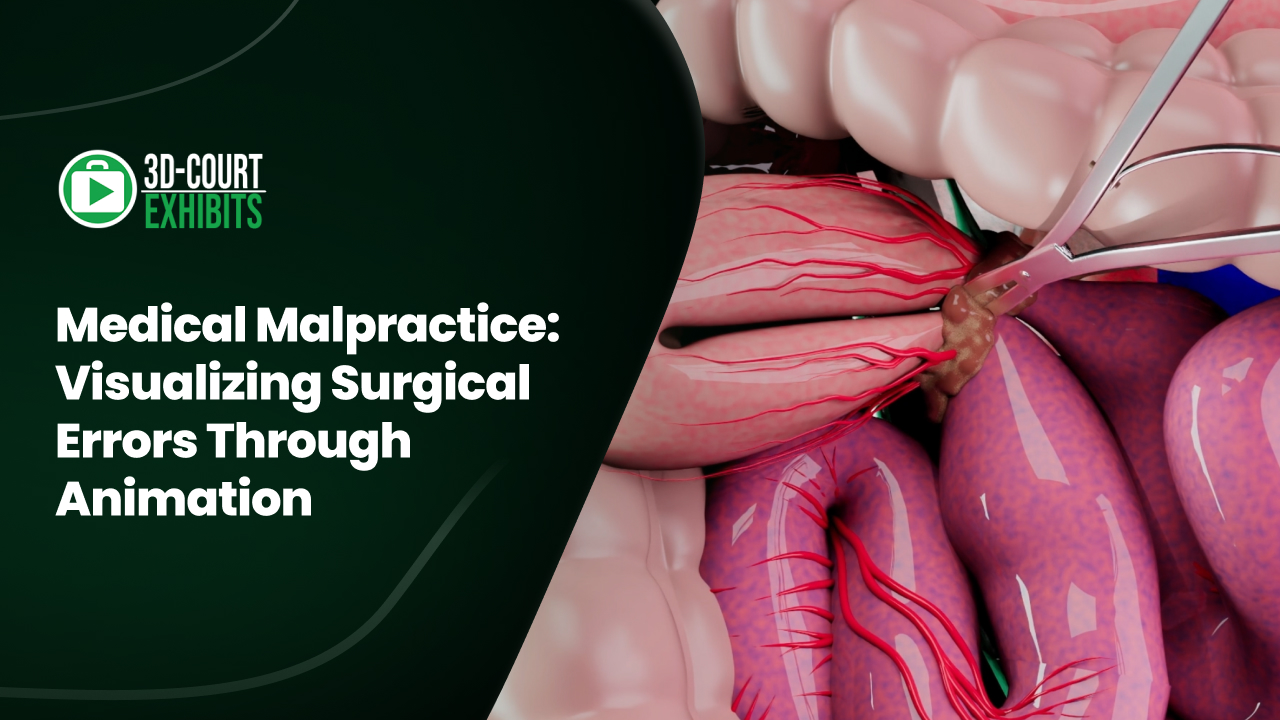
This medical animation demonstrates a doctor’s negligence. Given the patient’s overnight pain and elevated heart rate, the doctor should have ordered emergency surgery at 8:00 a.m. following the nurse’s report of the abdominal X-ray results. A bloodstream infection occurred during the procedure due to increased intestinal ischemia and toxin accumulation caused by the 7-8 hour delay, indicating the doctor has not been consistent with the patient’s standard of care, and resulted in an unfortunate death.
What 3D Animations Bring to Your Medical Case
Clarity and Precision: 3D animations break down medical procedures into visual narratives, eliminating ambiguity. From illustrating how an instrument was misplaced during surgery to demonstrating nerve damage, animation leaves less room for interpretation.
Engagement and Retention: People remember stories and images far better than dense testimony. When jurors see a dynamic reconstruction of the event, it sticks with them, encouraging a more informed verdict.
Technical Jargon: Medical testimony is often filled with terminology unfamiliar to non-experts. Animation translates that into straightforward visual language, bridging the gap between expert witnesses and the jury’s understanding.
Best Practices for Attorneys looking to Implement graphics
Collaborate with Medical Experts: Your animation needs to be medically accurate and defensible. To ensure that every detail holds truth.
Keep It Simple (KISS): Focus on the critical moments that illustrate negligence.
Integrate Animations Thoughtfully: Your animation should complement witness testimony and other evidence, not replace it. Use it as a visual aid that reinforces your narrative.
Conclusion
You can consider using 3D animations as a way to empathize with your audience and put them in the shoes of your client, allowing them to see what your client had endured, and that is the benefit of implementing animations in court; however, always ensure that any animations presented are accurate, supported by evidence, and clearly explained to the court.
Get a custom quote today, and we can support your legal strategy.