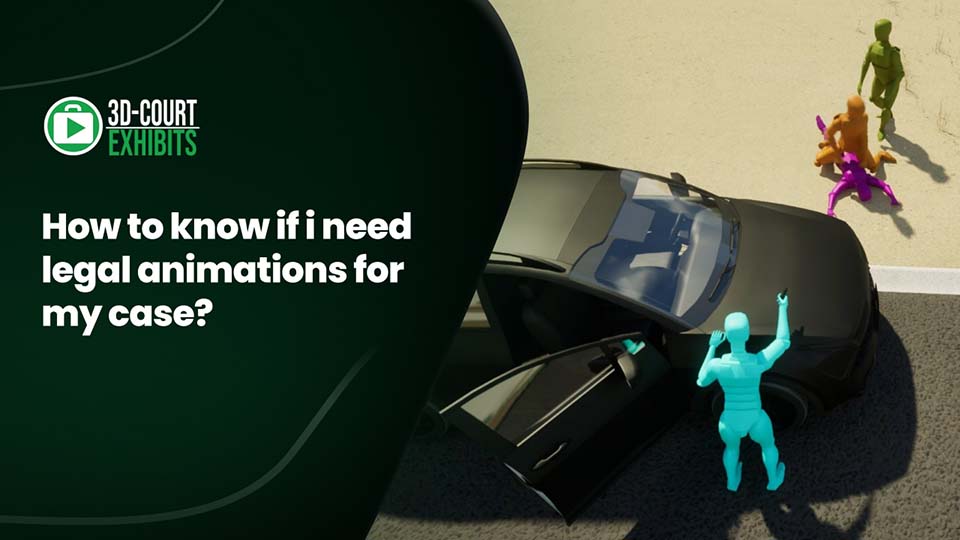
Not sure if you need legal graphics for your case? Discover when legal animations can strengthen your courtroom strategy in this post.

It’s worth understanding when and why these tools can make a real difference, so should I use legal graphics in my case? We are going to give you some points to consider.
When your case involves complicated data or timelines. If your argument depends on explaining a sequence of events, a timeline or chart could turn confusion into clarity.
When the facts are technical or scientific. In medical malpractice or environmental disputes, visuals help break down scenes and events.
When the opposing side is using visuals. Sometimes, you need to level the playing to avoid being overshadowed.
If you are unsure about using animation in a court case, the key is to ensure it is treated as demonstrative evidence, not substantive evidence, and that it is fair, accurate, and not unfairly prejudicial. Animations are generally admissible in court to help judges and juries visualize complex information and expert testimony.
If you suspect your case could benefit from legal graphics but aren’t sure how to create or use them, work with professionals who specialize in legal graphics. They’ll work closely with your legal team to ensure every element plays its part perfectly. Make sure that they have a high rate of admissibility, have worked with other clients before, and have good testimonials.